| Pseudotropheus demasoni | |
|---|---|
) | |
Scientific classification  | |
| Kingdom: | Animalia |
| Phylum: | Chordata |
| Class: | Actinopterygii |
| Order: | Cichliformes |
| Family: | Cichlidae |
| Genus: | Pseudotropheus |
| Species: | P. demasoni |
| Binomial name | |
| Pseudotropheus demasoni Konings, 1994 | |
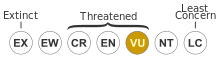
Pseudotropheus demasoni is a species of cichlid endemic to Lake Malawi where it is only known from the Pombo Rocks in Tanzanian waters. This species can potentially reach a maximum length of 10 centimetres (3.9 in) SL. It is now commonly found in the aquarium trade.[2]
The color of both sexes is dark blue with black vertical stripes with alternating lighter stripes of light blue to white. Male Demasoni cichlids have egg-spots on the anal fin, while females may lack egg-spots. Males also grows to a larger maximum size than females. Stress coloration is similar to normal coloration but much paler. This species belongs to the so-called [Mbuna] group of [haplochromine] cichlids, and like most Mbuna it is highly territorial, with parental care for the offspring (maternal [mouthbrooding]).
References
- ^ Kasembe, J. 2006. Pseudotropheus demasoni. In: IUCN 2012. IUCN Red List of Threatened Species. Version 2012.2. <www.iucnredlist.org>. Downloaded on 27 May 2013.
- ^ Froese, Rainer and Pauly, Daniel, eds. (2013). "Pseudotropheus demasoni" in FishBase. April 2013 version.