Ciudad Vieja | |
|---|---|
) | |
) Street map of Ciudad Vieja | |
) Location of Ciudad Vieja in Montevideo | |
| Coordinates: 34°54′24″S 56°12′30″W / 34.90667°S 56.20833°W | |
| Country |  Uruguay Uruguay |
| Department | Montevideo Department |
| City | Montevideo |
Ciudad Vieja (Spanish pronunciation: [θjuˈðað ˈβjexa], Old City) is the name of the oldest part of the city of Montevideo, capital city of Uruguay. Nowadays, Ciudad Vieja is a barrio (neighbourhood or district) of this city. In the last couple of years it has gone through a major transformation that has made it the main nightlife centre in town. It is in this area where most of the nightclubs are, and also it hosts the 'Mercado del Puerto' a traditional venue for Uruguayan food and beverages. The main port of Uruguay (being the main Big Draft port in southern South America) is located in Ciudad Vieja.
Part of this transformation is due to the campaign made by the mayor since this part of the city had been in a state of abandonment for decades.
Early history
Until 1829 it was surrounded by a wall that protected it from possible invasions. After the wall was torn down, the only part of it that was kept was its gateway, which is up to this day an emblem of this part of town. Some streets recall the presence of the wall, like Ciudadela (citadel) or Brecha (breach), which has this name because it was near but at this point that the British managed to open a breach on the wall during the 1807 British invasion. The old street Sarandí was turned into a pedestrian walkway in 1992, which increased its commercial and tourist attractiveness. In 2005 it was extended to beyond the Constitution Square.
Ciudad Vieja has elegant buildings from the colonial era and the first decades of independence. The Cabildo (built between 1804 and 1812), the Solís Theatre, the Metropolitan Cathedral and several museums, like the Museo Torres García[1] are among the most impressive ones. Also several design shops and recycled loft floors flourish in the streets near the port.
Places of worship
Several temples have been built in the historic heart of the city:
- Cathedral of the Immaculate Conception, St. Philip and St. James (head of the Roman Catholic Church in Uruguay)
- Parish Church of St. Francis of Assisi (Roman Catholic)
- Church of Our Lady of Lourdes and St. Vincent Pallotti (Roman Catholic, Pallottines)
- Charity Chapel, Maciel Hospital (Roman Catholic, Hospitaller Sisters of the Sacred Heart of Jesus)
- Cathedral of The Most Holy Trinity, popularly known as the English Temple (Anglican)
- Sephardic Jewish Community (Synagogue)[2]
Government and infrastructure
The National Meat Institute (INAC), a government agency, has its headquarters here.[3]
Gallery
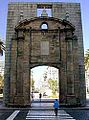
The Gateway of Ciudadela, was the entrance to the fortress of Montevideo
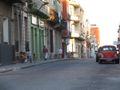
Street in the Ciudad Vieja
)
)
See also
- Montevideo
- Colonia del Sacramento
- Barrios of Montevideo
References
- ^ Torres Garcia Museum
- ^ Jewish Tourism in Uruguay - Temples
- ^ "foot.gif Archived 2012-03-23 at the Wayback Machine." National Meat Institute. Retrieved on April 18, 2012. "Rincón 545 - Montevideo, Uruguay"
Bibliography
- Assunção, Fernando O.; Bombet Franco, Iris (1991). Ciudad Vieja. Cuadernos del Boston (in Spanish). 1. Montevideo.